
A partnership for nature, people and climate
Conservation International is partnering with Procter & Gamble (P&G) to help the consumer goods company meet its nature commitments and together deliver benefits for climate, people, and biodiversity.
The partnership spans efforts to support the responsible sourcing of commodities like palm oil, advance natural climate solutions, and engage in landscape-level projects.
P&G’s Climate Goals: In 2024, P&G increased its goal for GHG emissions reductions at its facilities. P&G now aims to reduce its Scope 1 and 2 emissions by 65 percent by 2030 versus a 2010 baseline — an increase from its previous 2030 goal of 50 percent. This new science-based target is aligned to a 1.5 degrees Celsius climate scenario. P&G also aims to accelerate its efforts on climate change by advancing a portfolio of natural climate solutions projects that will balance the manufacturing emissions it does not eliminate this decade (2020-2030).
The Natural Climate Solutions Initiative (NCS-I) supports P&G’s goals by identifying and advancing a portfolio of projects designed to protect, improve, and restore critical ecosystems, provide climate benefits, and contribute to economic growth and poverty reduction.
P&G’s Nature Goals: P&G is advancing a portfolio of projects, in partnership with leading conservation organizations like Conservation International, to protect, restore, or improve greater than 1.5 million acres (~700,000 hectares) of land by 2030. The focus is on supporting projects in priority landscapes and ensuring benefits to people and biodiversity.
In partnership with farmers, landowners, local communities and Indigenous Peoples, Conservation International and P&G are progressing projects that address climate change and biodiversity loss while ensuring positive outcomes for people and communities.
Areas of Partnership
The Natural Climate Solutions Initiative (NCS-I)
P&G set an ambition to achieve net zero greenhouse gas (GHG) emissions across its operations and supply chain — from raw material to retailer — by 2040 as well as interim 2030 goals to make meaningful progress this decade.
Conservation International is partnering with P&G through the Natural Climate Solutions Initiative (NCS-I) to support P&G in advancing natural climate solutions to balance manufacturing emissions it does not eliminate this decade.
The NCS-I identifies and supports a portfolio of projects designed to protect, improve and restore critical ecosystems, provide climate benefits, and support economic growth and reducing poverty.
Projects in the Portfolio

Mantalingahan Landscape Conservation Project
One of the Philippines’ most vital biodiversity areas is the 120,457-hectare (297,655 acre) Mount Mantalingahan Protected Landscape, located near the southern tip of the island of Palawan. The Mantalingahan Landscape is a vital habitat for more than 1,000 plant and animal species — 10 percent of which are threatened, including the Palawan pangolin and the Palawan eastern frog. The landscape is also the home to over 12,000 Indigenous people, many of whom rely directly on nature for their livelihoods and are among the world’s most climate-vulnerable communities. Despite its protected status, the Mantalingahan Landscape continues to be threatened by deforestation and forest degradation. In the past two decades, its upland and mangrove forests have decreased by more than 20 percent due to illegal forest clearing.
Through collaboration with local communities, government institutions and civil society organizations, the project aims to strengthen the role of Indigenous and local communities in maintaining healthy ecosystem services and ensuring equitable benefit-sharing. Its objective is to augment community conservation and protected area plans, and support forest protection, restoration, and sustainable resource management. The Mantalingahan Landscape Conservation Project is built on the full and effective participation of communities, governments, institutions and partners to conserve biodiversity, support sustainable livelihoods and achieve climate targets.
Central Cardamom Mountains Landscape
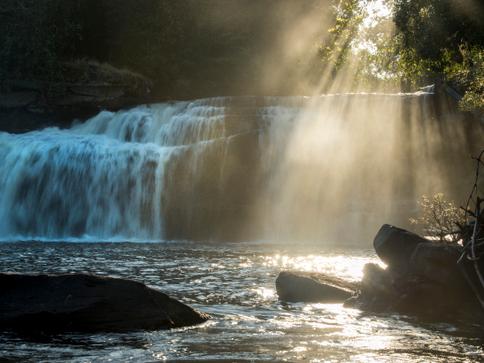
With over 95 percent of its 401,313 hectares (991,666 acres) still intact, the Central Cardamom Mountains Landscape is one of Cambodia's least deforested areas. However, illegal logging and wildlife poaching are increasing. To combat these pressures, the project works with local communities, partners and the Ministry of Environment of Cambodia to ensure the landscape’s continued protection. The project is helping to strengthen protected area management and law enforcement, while reducing the drivers of deforestation. We are supporting the creation of sustainable, long-term financing for conservation, including through carbon credit generation and sale, while ensuring that decision-making is driven by data and local people are considered and included at every step along the way.
Approximately 14,000 local and Indigenous community members rely on the Central Cardamom Mountains Landscape for their livelihoods, with an additional 30,000 people depending on the vital watershed of Tonle Sap Lake — home to one of the world’s largest inland fisheries. Additionally, this landscape provides critical habitat to more than 500 species, including over 60 globally threatened species listed on the IUCN Red List, such as the Asian elephant, clouded leopard, Siamese crocodile, Sunda pangolin and the pileated gibbon, along with many species unique to this region. The project works closely with communities, government and the private sector to maintain the landscape’s ecological integrity while ensuring Indigenous Peoples and local communities are active stakeholders in its long-term conservation and benefit from livelihoods that are economically, socially and environmentally sustainable.
Tajimat Pujut
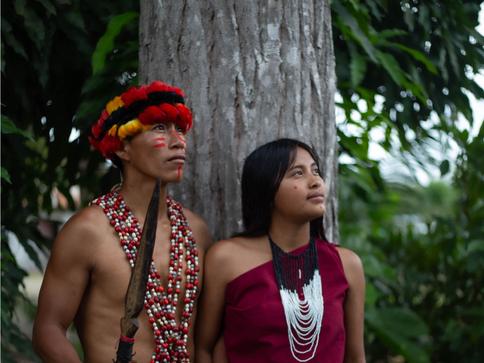
The Awajún Indigenous territory lies within the Alto Mayo landscape in the San Martin region of Peru. This Amazonian rainforest is a critical habitat, hosting more than 1,200 native plant species and numerous birds, mammals and reptiles, including 27 species recently discovered by Conservation International that are new to science. However, the territory faces deforestation from expanding agriculture and timber harvesting. The Awajún Indigenous Federation of Alto Mayo and Conservation International Peru are working with Awajún communities to halt and reverse deforestation across 231,000 hectares (570,813 acres) through the Tajimat Pujut project (which translates to “Good Living”). The project focuses on forest conservation through income diversification while supporting cultural ties between the Awajún people and their land.
This project encompasses 16 native communities and over 11,000 people. After years of leasing their land to immigrant farmers, the Awajún not only lost their forests, but their cultural ties to the land. Reconnecting with their traditions has been key to building Tajimat Pujut. Efforts include rescuing and sharing ancestral practices in communal libraries and developing a school of governance where future leaders engage with policy, leadership, Indigenous economy and environmental issues. At the same time, the project promotes food security and strengthens bio-businesses such as vanilla, cacao, herbal teas and ecotourism – forming a pathway toward a “good living” rooted in resilience, culture, and forest conservation.

One Mara Carbon Project
The Greater Mara Ecosystem in southwestern Kenya is a critical landscape for the local Maasai communities who have been living in the region for centuries, relying on pastoralism and, more recently, tourism for their livelihoods. It is a vital biodiversity area, home to species like black rhinoceros, lions, and cheetahs and part of the iconic "great migration" of wildebeest, zebras, and other large herbivores from the Serengeti. However, the landscape faces increasing fragmentation due to land conversion from traditional communal rangelands to small-holder farms and permanent settlements. This fragmentation, often involving fencing, blocks wildlife migration routes, disrupts animal breeding cycles, and contributes to declines in large mammal populations, while overgrazing and high livestock densities further degrade the land.
The One Mara Carbon Project, led by the Maasai Mara Wildlife Conservancies Association, Ahueni AG, and Conservation International, addresses these challenges by improving livestock management through planned rotational grazing, supporting restoration activities and facilitating the creation of new conservancies — a locally owned and managed protected area for wildlife. The project will benefit up to 16,000 Maasai landowners and engage up to 24 community-owned conservancies, placing landowners at the center through strengthened community governance structures to ensure long-term sustainability. Together, these combined efforts aim to increase soil organic carbon stocks, improve livestock conditions, enhance biodiversity and restore landscape connectivity for wildlife, delivering integrated benefits for both the environment and local communities.

Antami LIFT
The Peruvian Amazon is crucial for sustaining local livelihoods and supports exceptional biodiversity, including many endemic and endangered species. However, large areas of the region have been degraded by “selective harvesting,” where high-value trees are extracted without full deforestation. This practice creates canopy gaps that allow fast-growing woody vines, known as lianas, to proliferate. When abundant, lianas compete with trees for light and nutrients, suppressing tree growth, slowing natural forest regeneration and reducing the forest’s capacity to store carbon. These dynamics weaken forest structure and diminish the ecosystem’s overall health and function.
The Antami-LIFT Project, led by Conservation International, applies an innovative, science-based approach —Liana-Impacted Forest Treatments (LIFT) — to accelerate forest recovery and restore productivity in these degraded systems. By carefully reducing excess liana density, the project enables trees to grow faster, increase biomass and enhance carbon sequestration, while improving overall forest structure and resilience. Implemented in partnership with local communities, forest operators and government, the project also creates sustainable employment opportunities, strengthens forest management practices and opens access to carbon markets through rigorous monitoring and transparent methodologies. Together, these efforts help generate new income streams, deliver measurable climate and biodiversity benefits, and reduce the pressure to convert forests to other land uses.
Sherbro River Estuary Blue Carbon Project
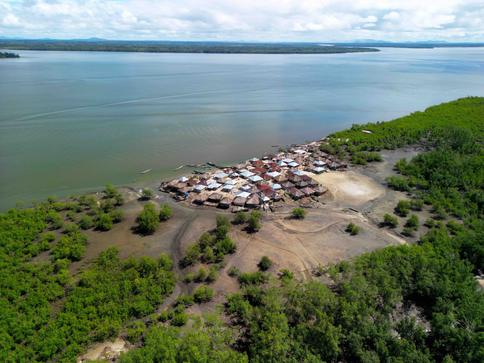
The Sherbro River Estuary in Sierra Leone is a biodiversity hotspot that supports over 70 wildlife species, including several classified as critically endangered, endangered, or vulnerable on the IUCN Red List, such as the West African manatee, Timneh parrot, and sooty mangabey. This vital ecosystem is composed of mangrove forests that play a vital role in climate change mitigation, with the ability to sequester several times more carbon dioxide than terrestrial forests. However, these ecosystems face severe threats from declining fish stocks driven by unsustainable offshore trawling, which has forced many local fishers to harvest mangroves to sell for income and survival, leading to habitat loss. Additional pressures include harvesting for cooking, smoking fish, and construction materials, as well as clearing forests for rice farming and salt production. In response, West Africa Blue is collaborating with local communities through the Sherbro River Estuary Blue Carbon Project to restore and sustainably manage mangrove ecosystems. The project combines conservation education with practical livelihood alternatives such as fuel-efficient cookstoves, improved fish smoking ovens and integrated woodlots to reduce pressure on mangroves while strengthening local economic resilience.
Landscape Portfolio
In addition to responsibly sourcing the natural resources it procures, P&G seeks to go beyond its supply chain to protect, restore, and improve ecosystems in landscapes that are important to its business.
P&G and Conservation International believe these additional conservation efforts at the landscape level are needed to support biodiversity while ensuring benefits for people and communities. By partnering on a larger scale, we can increase positive impacts on ecosystems.
P&G is advancing a portfolio of projects, in partnership with leading conservation organizations like Conservation International, to protect, restore, or improve greater than 1.5 million acres (700,000 hectares) of land by 2030.
Conservation International Projects in the Portfolio
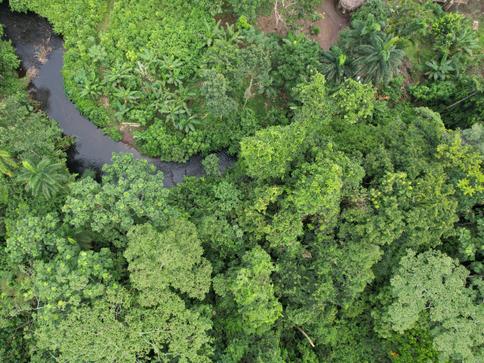
Northern Ecuadorian Amazon
The Sucumbios and Orellana provinces in the Northern Ecuadorian Amazon are exceptionally rich in biodiversity. This region is home to jaguar populations and serves as a buffer zone for globally renowned protected areas such as the Yasuní National Park. Indigenous lands in this landscape have extensive forest cover and have been guarded for generations by the Kichwa, Siona, Siekopai, Shuar, Waorani, and A'i Kofán Indigenous Peoples.
Since 2000, the deforestation rate has increased due to the expansion of pastures and perennial monocultures of oil palm, cacao and coffee. With companies increasingly sourcing palm oil from the Amazon rather than southeast Asia, there is a growing risk of rapidly accelerating deforestation due to palm expansion, if this process is not carefully managed. With support from P&G, Conservation International seeks to create a model that balances economic production and environmental protection while improving the livelihoods and well-being of local and Indigenous communities through strengthening governance, improved management and protection of forest areas or remaining forest fragments and advancing sustainable production practices.

Batang Toru Forest Ecosystem
The Batang Toru Forest Ecosystem (BTFE), located in Indonesia’s North Sumatra Province, spans over 240,000 hectares (593,052 acres) across three districts: South Tapanuli, North Tapanuli and Central Tapanuli. The region represents one of the last intact forests in North Sumatra Province, home to globally and locally significant biodiversity, including the critically endangered Tapanuli orangutan; and contains important resources – such as minerals, freshwater, energy and agriculture. The ecosystem provides critical freshwater resources that support the well-being and livelihoods of more than 253,782 people in 199 villages. Moreover, it supports smallholder agriculture across the broader Tapanuli region, including agroforestry in the upland areas and palm oil plantations in the lowlands. In addition, a study conducted by Konservasi Indonesia, Conservation International’s main partner in Indonesia, found that water from BTFE helps maintain water levels in peatlands in the lowland areas, which is important for minimizing fire risk on peat and avoiding the release of carbon.
As a crucial ecosystem for both local communities and biodiversity, the Batang Toru Forest faces multiple threats of environmental degradation, particularly land-use changes. Parts of the forest have become fragmented, diminishing habitat for endangered wildlife and undermining vital ecosystem services. Protecting and managing this key forest area requires multistakeholder coordination and collaboration, as well as sufficient resources for effective landscape management.
Building on our long-standing presence and strong relationships with key stakeholders, the North Sumatra Government and Konservasi Indonesia have been facilitating multistakeholder collaboration for improved protection and to establish an integrated BTFE management plan. We aim to protect and restore critical forest and habitat in BTFE by supporting the adoption and long-term financing of the integrated BTFE Management Plan. We aim to build capacity of key stakeholders to ensure effective implementation, management and monitoring of forests; strengthening livelihoods through social forestry; and supporting wildlife connectivity within the BTFE.